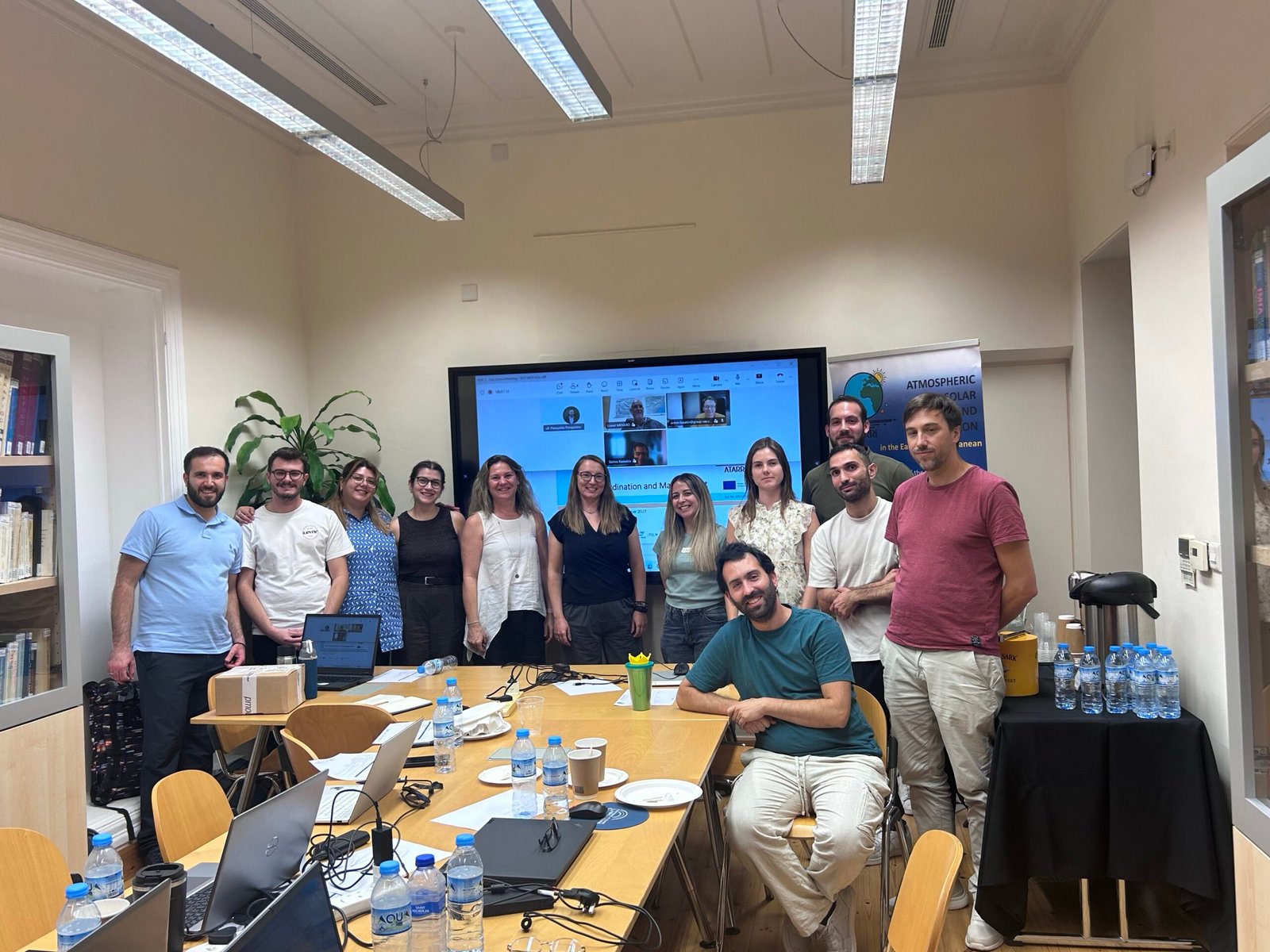
On 13–14 October 2026, partners of the ATARRI project gathered in Limassol, Cyprus, for the project’s 2nd Annual Meeting, third Expert Visit (EV3) and Kick off of Exploratotory research project. The event was hosted by the Eratosthenes Centre of Excellence (ECoE). It marked the project’s 25th month and the start of its second period.
Taking stock after two years
The first day was dedicated to the 2nd Annual Meeting. Dr Rodanthi-Elisavet Mamouri of ECoE welcomed participants and set out the goals of the two days. The consortium then reviewed the project’s overall progress and discussed follow-up on the review of the first reporting period.
Partners presented the work carried out to strengthen ECoE’s scientific capacity, raise its international research profile, build management and business skills, and communicate the project’s results. Partners then presented an updated work plan for the second period, setting the course for the project’s remaining activities.
Launching joint research
The second day marked the official kick-off of the Exploratory Research Project, where ECoE researchers work side by side with experts from partner institutions. Joint teams presented their first steps in four research areas:
- Dust forecasting and radiative effects: improving predictions of desert dust and understanding its impact on the atmosphere
- Spaceborne observations: assessing how well satellites capture aerosols and atmospheric conditions
- Solar energy applications: using atmospheric research to support solar energy production
- Aerosol characterization: studying the physical properties of airborne particles
Each presentation was followed by an open discussion. The meeting closed with an agreed research calendar and a set of next steps for the coming months.
A shared effort
The meeting brought together researchers from the Eratosthenes Centre of Excellence, the Barcelona Supercomputing Center (BSC-CNS), GRASP SAS, MINES Paris – PSL / ARMINES, FCiências.ID and Ciências ULisboa, and PMOD/WRC. We thank all partners for two productive days, and we look forward to sharing results from the Exploratory Research Project as the work progresses.